Peter Thiel’s $44M Bet on BitMine Sparks a 12.5% After-Hours Surge
July 16, 2025
Uniswap Labs President Mary-Catherine Lader Resigns After Four Years
July 16, 2025Trump’s Influence Could Propel Crypto Bills Through the House: GOP Divided on CBDC Ban
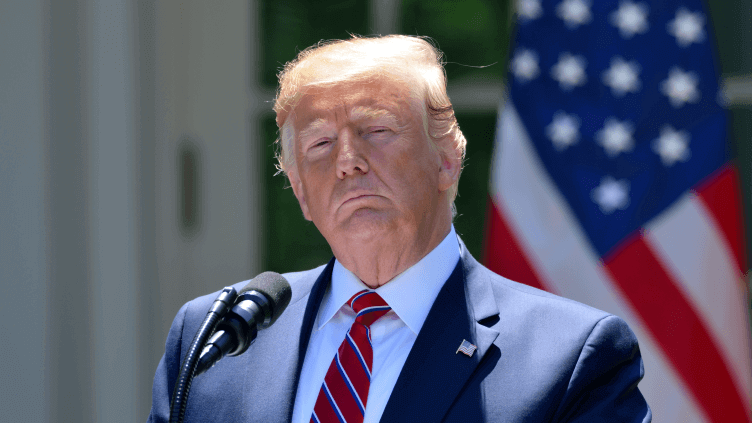
Former President Donald Trump appears to be making significant headway in advancing three crucial crypto bills currently under consideration in the U.S. House of Representatives. On Tuesday, Trump announced via Truth Social that he had successfully convinced 11 of the 12 Republican lawmakers who initially pulled support for the bills to back the legislation.
“I am in the Oval Office with 11 of the 12 Congressmen/women necessary to pass the GENIUS Act and, after a short discussion, they have all agreed to vote tomorrow morning in favor of the Rule,” Trump wrote, signaling a potential breakthrough for the bills on Wednesday.
The legislation in question is part of a Republican-led effort to pass crypto laws before Congress breaks for its August recess. However, the bills have faced hurdles, notably around concerns about central bank digital currencies (CBDCs), which have stalled progress.
Republican Divisions Over CBDC Provisions
On Tuesday, the vote to move forward with the three crypto bills was unexpectedly halted. 13 Republican lawmakers pulled their support, demanding a CBDC ban be added before they would agree to proceed. Some lawmakers also wanted to bundle the GENIUS Act (focused on stablecoin regulations) with two other bills: the Anti-CBDC Surveillance Act and the CLARITY Act, which provides a sweeping framework for crypto market structure.
The split came as a surprise, given that the GENIUS Act had widespread support earlier in the week. House Majority Leader Steve Scalise was among those who voted no on the procedural vote, along with lawmakers like Marjorie Taylor Greene and Andy Biggs.
“I just voted NO on the Rule for the GENIUS Act because it does not include a ban on central bank digital currency and because Speaker Johnson did not allow us to submit amendments to the GENIUS Act,” Greene tweeted after the vote.
Several dissenters, including Biggs and Burchett, expressed concerns over the GENIUS Act’s framework for CBDCs, believing it could pave the way for a layered CBDC system. They’re calling for amendments that would guarantee self-custody of crypto assets.
The bills are part of a Republican-led initiative dubbed “Crypto Week”, with the goal of passing pro-crypto laws before Congress adjourns for its summer break. In addition to the GENIUS Act, the bills under consideration also include legislation to regulate stablecoins and create clearer frameworks for crypto exchanges.
House Speaker Mike Johnson expressed gratitude for Trump’s intervention, praising his involvement in ensuring that the GENIUS Act moves forward. “I’m thankful for President Trump getting involved tonight to ensure that we can pass the GENIUS Act tomorrow,” Johnson posted on X.
The anti-CBDC stance remains a key issue, with many Republican lawmakers demanding that any crypto bills be amended to specifically ban central bank-issued digital currencies. Trump’s January executive order had already included a CBDC ban, reflecting his concern over the Federal Reserve’s role in issuing such digital assets.
The Number of Bills and Procedural Hurdles
As the House moves toward another vote on the legislation Wednesday morning, a key sticking point remains the number of bills being considered. Lawmakers are split on whether the three bills should be passed together in one package or separately.
House Speaker Mike Johnson acknowledged the difficulty of passing the legislation all at once, noting that the Senate may not support the bills if they are bundled together.
“We have to do them in succession,” Johnson said, suggesting that splitting the bills could improve the chances of passing them in both the House and Senate.
The House is scheduled to meet on Wednesday for a morning debate, with hopes that the crypto bills will move closer to a vote. Industry insiders have noted that the bills’ failure to pass on the first attempt is not unusual, pointing to the GENIUS Act’s initial failure in the Senate in May.
Caitlin Long, founder of Custodia Bank, reminded followers on X that the GENIUS Act also faced a procedural setback earlier in the year, but ultimately passed the Senate in June with bipartisan support.
Legal Experts Weigh In on CBDC Provisions
Legal experts have also weighed in on the CBDC debate, including Eleanor Terrett, host of the Crypto in America podcast, who clarified that the GENIUS Act already prohibits the Federal Reserve from offering a retail CBDC.
“The section below says the bill shall not be construed as expanding the Fed’s authority to offer services directly to the public — meaning it cannot authorize things like digital wallets, personal accounts, or anything that veers into CBDC territory,” Terrett explained on X.
The outcome of Crypto Week remains uncertain, but President Trump’s involvement has added significant momentum to the effort. As the House reconvenes on Wednesday, lawmakers will need to address the CBDC concerns and work through procedural challenges to pass the bills.
With CBDC regulation a key sticking point and ongoing opposition from a faction of the Republican Party, it’s clear that the path to regulatory clarity for cryptocurrency in the U.S. will continue to be a bumpy ride.